The Pharmacy Show 2026: reflecting on two days of change and opportunity
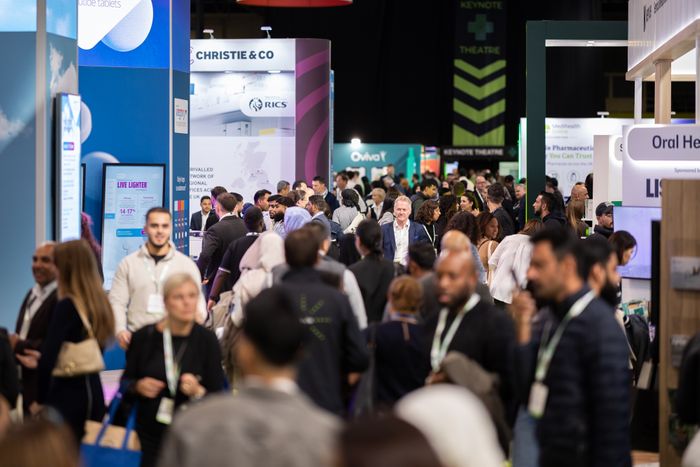
On 11 and 12 October, the NEC Birmingham once again became a meeting place for the community pharmacy sector, bringing together 10,342 attendees, 352 exhibitors and 204 speakers across two busy days.
Whilst the figures give a sense of the scale of this year’s show, they do not capture the excitement in the room. Across the theatres, exhibition floor and networking areas, there was a clear sense of a sector in motion. The conversations were honest about the financial, operational and workforce pressures facing community pharmacy, but they were also practical, constructive and focused on what needs to happen next.
One of the most rewarding parts was seeing the gangways, theatres, stands, and networking spaces come to life, with people talking, listening, questioning and sharing ideas. The sessions provided the starting point, but it was the conversations between them, the connections made on the show floor and the ideas attendees took back to their pharmacies that really brought the event to life.
Across the two days of conversation, several themes emerged repeatedly across the programme: the future of clinical practice and independent prescribing, sustainable business models, and the role of technology.
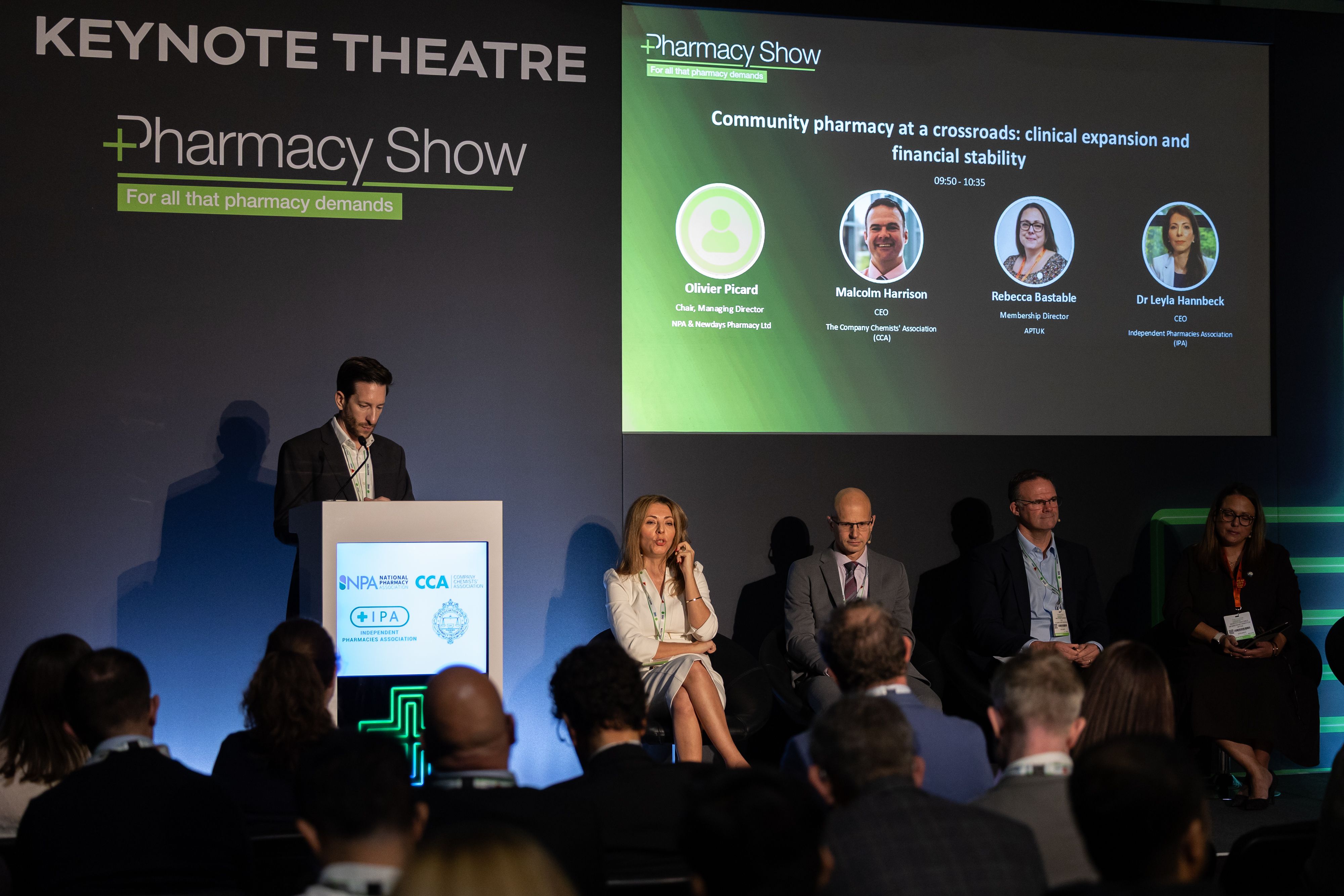 Is community pharmacy at a crossroad?
The opening keynote, titled Community pharmacy at a crossroad: clinical expansion and financial stability, explored the pressures and opportunities facing the sector as it takes on a greater clinical role. Bringing together panellists Olivier Picard (Chair of the National Pharmacy Association and Managing Director of Newdays Pharmacy Ltd), Leyla Hannbeck (CEO & Executive Chair of the Independent Pharmacies Association), Malcolm Harrison (CEO of the Company Chemists’ Association), and Rebecca Bastable (Membership Director at the Association of Pharmacy Technicians UK), the title also prompted a thoughtful discussion about whether community pharmacy is facing one defining crossroad or continuing a longer process of change and adaptation.
Alongside the need for greater financial sustainability, the panellists discussed the importance of funding, workforce planning, digital integration and making better use of the skills of pharmacy technicians. The conversation highlighted that community pharmacy has the skills, experience and public trust to continue developing its role, but that this progress needs to be supported by the right investment and infrastructure. The focus was therefore not simply on where the sector is heading, but on how it can evolve while continuing to deliver the core work that patients and communities rely on.
Building the future of independent prescribing
Independent prescribing was another important thread running through the programme and Building the future of independent prescribing in community pharmacy: insights, opportunities, and the way forward looked at what will be needed to expand prescribing safely and consistently. Speakers Lorna Jacobs (Communities & Insights Lead, Thiscovery), Michael Lennox (National Pharmacy Association (NPA) Integration Lead), Lem Ngongalah (Policy Researcher & Data Analyst at NPA), and Gareth Jones (Director of External & Corporate Affairs, NPA) came together to share their insights.
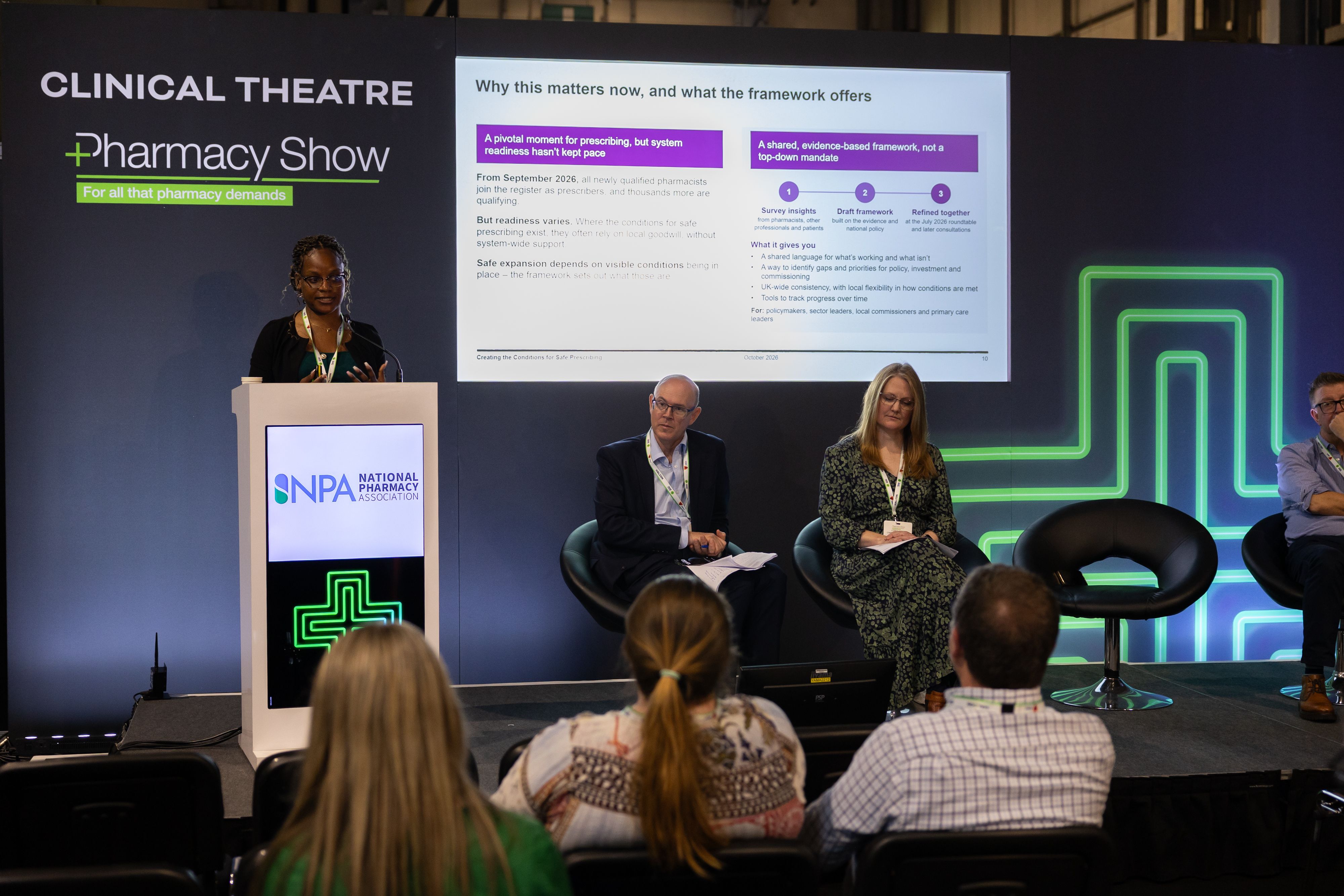 The session shared findings from research involving almost 500 participants and made a valuable distinction between ambition and infrastructure. There is strong support for the role prescribing could play in improving access to care, but the systems around it still need to develop. That includes funding, clinical pathways, access to patient records, governance, supervision and stronger relationships between community pharmacy and general practice.
The framework presented in the session placed patients at its centre and identified three conditions for progress: structural, relational and confidence. This provided a useful reminder that prescribing is not simply a qualification or a service model. It depends on the wider environment being ready to support pharmacists, patients and other healthcare professionals.
 Choosing the right private service
The Pharmacy Owners’ Forum session Choosing the right private service to invest in: building your non-NHS pharmacy with Amerjit Singh (Owner & Founder, Skills4Pharmacy and Sharoe Green Pharmacy) brought the discussion back to the practical realities of running a pharmacy business.
Its central message was that private services should not be introduced simply because they appear profitable or because another pharmacy is offering them. Pharmacy owners need to understand what their local communities want, assess the competition, calculate the true return on investment and consider whether their teams have the capacity to deliver the service properly.
The session also explored the importance of workforce planning. A pharmacist cannot be expected to take on more consultations and services while continuing to carry every other responsibility within the pharmacy. Making better use of the skills and experience of pharmacy technicians and the wider team will be essential to creating the capacity for growth.
The advice was straightforward: understand your local need, work out the numbers and make sure the service is properly resourced before introducing it.
 Technological transformation in community pharmacy
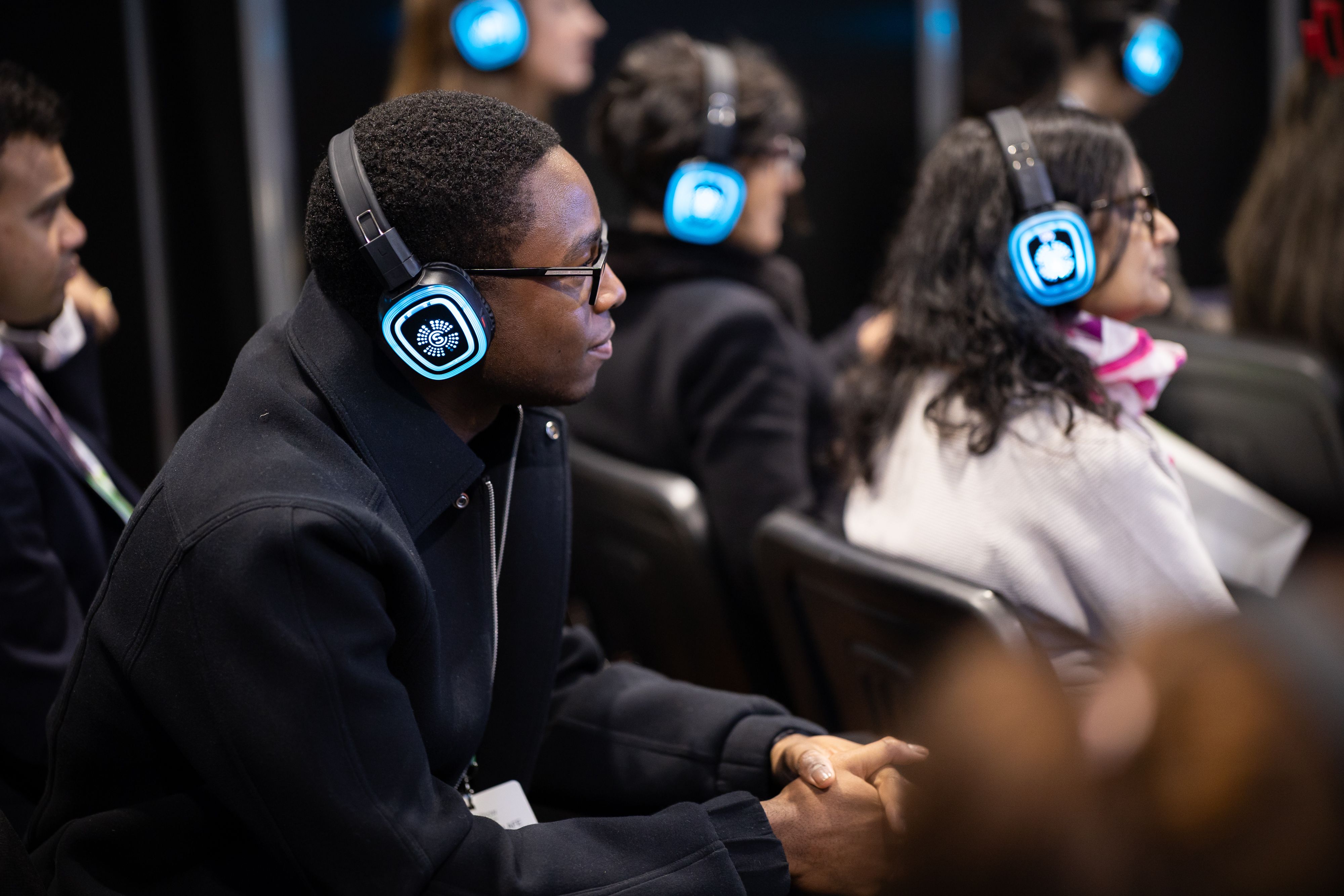
The role of technology was explored in Technological transformation in community pharmacy presented by Rahul Singh (Chief Pharmacy & Medicines Information Officer, NHS England) which considered how digital infrastructure could support the sector’s changing responsibilities.
A key point was that buying individual pieces of technology will not necessarily deliver meaningful benefits if the systems do not connect with one another. Automation, dispensing systems, prescribing records and patient-facing tools need to work together if pharmacies are to improve safety, efficiency and the patient experience.
The session covered the development of electronic prescribing, prescription tracking through the NHS App, the future Single Patient Record and the potential for better-connected medicines information across primary and secondary care. It also acknowledged that the sector has moved beyond simply asking what technology can do. The more important question now is how these capabilities can be implemented in ways that genuinely change services and improve day-to-day practice.
Taken together, these sessions reflected a sector with no shortage of ambition, but with important questions still to answer about capacity, funding, workforce and infrastructure. Community pharmacy is being asked to do more, but the route forward will depend on whether the sector is given the funding, workforce, infrastructure and confidence to make that possible.
 That is why events such as the Pharmacy Show continue to matter. The value of being in the room is not limited to listening to a session. It is found in the questions asked from the audience, the conversations between theatres, the demonstrations on the show floor, the chance to meet peers facing similar challenges and the unexpected connections that can lead to new ideas or practical solutions.
Thank you to everyone who helped make The Pharmacy Show 2026 what it was: our speakers and chairpeople, exhibitors, partners, attendees and the wider show team. Your time, expertise and enthusiasm created two days of meaningful conversations, practical learning and valuable connections, while contributing to the discussions that continue to shape the community pharmacy sector. From all of us at The Pharmacy Show, thank you for playing your part.